Sample Generated Lesson Note: Basic Science (JSS 2)
Explore the Lesson Plan, Lesson Notes, Key Points, and Practice Questions generated by NaijaPrepAI.
Photosynthesis in Green Plants
Every living organism needs energy to grow, repair tissues, and carry out daily life processes. Unlike animals that move around to find food, green plants manufacture their own food inside their leaves using sunlight, water, and carbon dioxide. This remarkable process is called photosynthesis.
Exports cost 5 units per file.
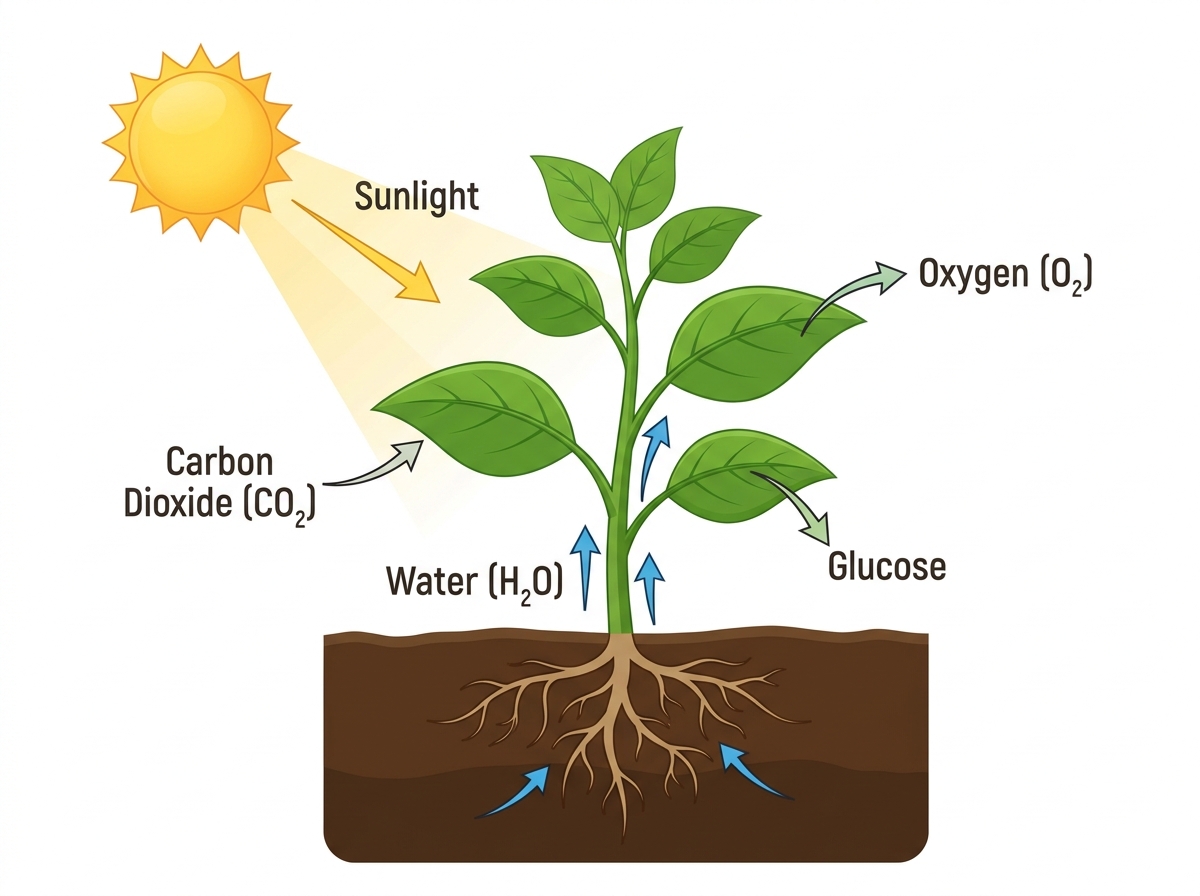
AI Generated Educational Illustration
Definition of Photosynthesis
Photosynthesis is the process by which green plants manufacture their own food (glucose) from carbon dioxide and water in the presence of sunlight and chlorophyll, releasing oxygen as a by-product.
The word comes from two Greek terms: photo (meaning light) and synthesis (meaning putting together). Because green plants can make their own food, they are called autotrophs or producers.
Raw Materials and Conditions Required
For photosynthesis to take place successfully in a Nigerian farm or garden (such as a maize or cassava plant), four essential factors must be present:
- Carbon dioxide (): Absorbed from the atmosphere through tiny pores on the underside of leaves called stomata.
- Water (): Absorbed from the soil by the root hairs and transported upward through the xylem vessels to the leaves.
- Sunlight: Provides the light energy needed to drive the chemical reaction.
- Chlorophyll: The green pigment found inside chloroplasts in leaf cells that traps light energy from the sun.
Word and Chemical Equation
The overall process of photosynthesis can be represented by the word equation:
In balanced chemical symbols:
Products of Photosynthesis and Their Uses
- Glucose (): Used immediately by the plant for respiration to release energy, or converted into starch and stored in roots (like cassava and yam), stems (like sugarcane), or fruits (like mango).
- Oxygen (): Released into the atmosphere through the stomata, where humans and animals breathe it in for respiration.
Importance of Photosynthesis
- Food production: It is the primary source of food for all living things, directly or indirectly.
- Oxygen supply: It maintains the balance of oxygen and carbon dioxide in the atmosphere, keeping the air clean for humans and animals.